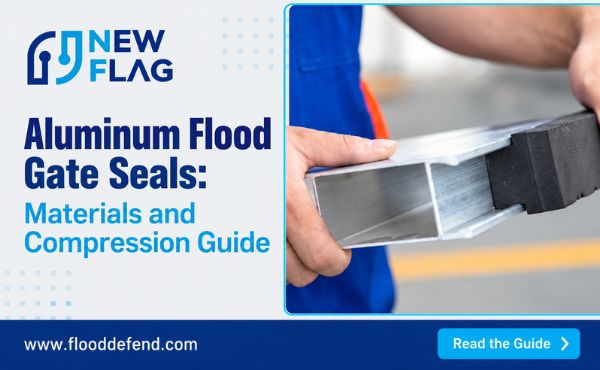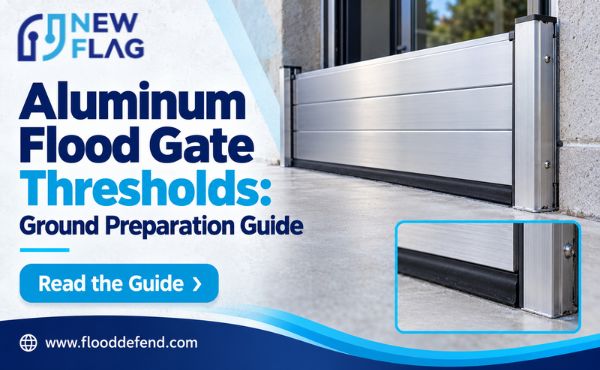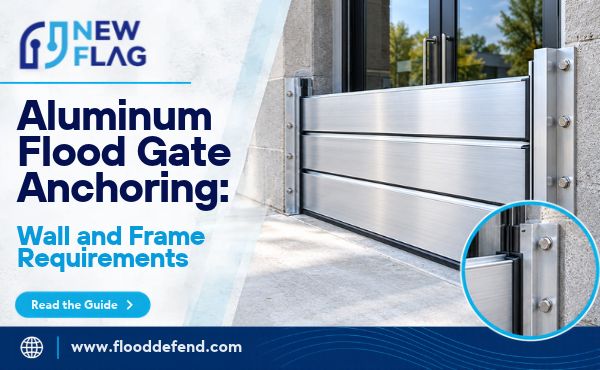
Aluminum flood gate seals control water passage where the panel meets its frame, threshold, and any adjoining sections. Their performance depends on the material compound, profile, contact surfaces, and compression imposed by the gate’s hardware. Specifying EPDM alone does not establish that a gasket will seal correctly in a particular flood gate.
For buyers and maintenance teams, the practical objective is to preserve the seal geometry approved for the system. Material selection, adjustment, cleaning, and replacement should support that geometry. A visibly soft gasket or a tightly closed latch is not enough evidence that every contact line is working.
Seal Positions and Water Paths
Identify the bottom seal, both side seals, and any panel-joint seals on the drawing. Whole removable panels commonly seal around their edges, while divided and stackable systems introduce further connections. A submerged closure may need a top sealing detail as well.
The locations have different demands. The bottom seal encounters floor irregularities and grit. Side seals depend on frame alignment and panel position. Joint seals need the adjoining components to meet in the correct orientation and assembly order.
Pay particular attention to corners. A bottom gasket and side gasket can each look sound while their intersection leaves a route for water. The specified corner construction, molded feature, or approved splice therefore matters as much as the straight lengths.
Separate replaceable gaskets from installation sealants. A gasket seals the movable assembly through controlled contact. Sealant or another approved detail behind a permanent frame prevents water bypassing the frame-to-building interface. Replacing one does not automatically repair the other.
Material Compound and Profile Selection
EPDM is used in many water-exposed sealing applications, but its suitability depends on the actual compound and service conditions. Outdoor exposure, temperature, recovery after compression, and chemical contact all influence selection. Two black EPDM profiles may have different hardness, structure, and behavior.
Ask for the approved profile and material specification for the aluminum flood gate, not simply a polymer name. The profile may be solid, hollow, or cellular, and each construction changes how it responds to compression. Its retention method also affects whether it can twist, stretch, or move in service.
Neoprene and other elastomers appear in some flood protection products. This does not mean they can be substituted into an EPDM-based design without review. Material changes can alter the closure force and the seal’s ability to recover when the gate is removed.
Consider contamination exposure. Water entering a commercial site may contain fuels, oils, cleaners, or other chemicals. Standard EPDM should not be assumed suitable for petroleum contact. If that exposure is credible, request compound-specific compatibility guidance from the gate or seal supplier.
Color is not a reliable specification. Record the manufacturer’s part number, profile dimensions, compound description where available, and intended installation position. This information is particularly useful when ordering spares several years after installation.
Compression and Contact Pressure
Compression allows a suitable gasket to conform to its mating surface and develop sealing contact. Too little compression can leave gaps. Excessive compression can increase operating force, damage the profile, or interfere with the designed assembly position.
There is no universal compression percentage for aluminum flood gate seals. The correct range depends on the gasket profile, material, support geometry, and closure mechanism. Use the gate manufacturer’s adjustment method and limits.
Hardware settings also differ. Some systems specify torque, others use a latch position, travel stop, or a particular assembly sequence. Do not convert one method into another without approval. High tightening torque does not necessarily produce uniform gasket pressure.
Check whether the panel seats squarely before compression begins. If one corner contacts early, tightening can load that region heavily while leaving another region under-compressed. More force may hide the alignment problem rather than solve it.
Water load can change panel and frame geometry. The seal arrangement must retain effective contact under the specified operating conditions, not only during a dry visual check. That is why complete-system evidence is more useful than a gasket material datasheet alone.
Frame, Floor, and Corner Conditions
A seal cannot compensate indefinitely for a damaged or unsuitable contact surface. Deep grooves, open joints, sharp edges, or loose threshold sections can interrupt contact or cut the gasket. Repair the surface to the approved detail before blaming the rubber.
Keep side channels and seating faces free of trapped grit. A small hard particle can create a local contact gap or score the seal as the panel moves. Use cleaning tools that remove contamination without scratching the mating surface.
Inspect the gasket retention path. A profile partly pulled from its groove can appear continuous from the front while sitting incorrectly behind the panel edge. Twisting or stretching during installation can also alter the corner geometry.
Do not add generic foam tape over a damaged seal. That changes the stack of materials and can prevent the original gasket or latch from reaching its designed position. A temporary patch should only be used where the manufacturer provides an approved method and limitations.
Similarly, do not use permanent adhesive or sealant on a removable contact line unless the design requires it. It may bond parts together, trap debris, or complicate the next deployment. Installation sealants and operational sealing accessories have different roles.
Cleaning, Inspection, and Replacement
Clean seals using the product’s maintenance instructions. Remove loose grit before wiping so it is not dragged across the rubber. Where mild detergent and water are permitted, rinse residues and allow the assembly to dry before storage.
Avoid selecting solvents or lubricants by habit. Compatibility varies by compound and product. A cleaner safe for aluminum may still damage the gasket, and lubricant intended for a metal hinge may be unsuitable for the adjacent seal.
| Observed condition | Possible significance | Appropriate next step |
|---|---|---|
| Cuts or torn corners | Interrupted sealing path | Obtain the approved replacement detail |
| Swelling or unusual softness | Possible chemical attack | Identify exposure and review compatibility |
| Persistent flattening with poor recovery | Possible compression set | Assess against the supplier’s criteria |
| Profile pulled from its retainer | Incorrect seating | Refit or replace as instructed |
| Patchy contact with intact rubber | Alignment or surface issue | Check geometry before replacing seals |
Replacement timing should follow condition and manufacturer guidance rather than a universal calendar interval. Exposure, storage, deployment frequency, and prolonged compression affect service life differently.
When replacing a seal, verify its orientation and length without stretching it to fit. Corners, joints, and adhesives may need specified preparation or curing. If the manufacturer supplies an assembled seal set, preserve the assigned position of each component.
Procurement Information for Spare Seals
Keep a seal schedule linked to the gate identifier. Include part numbers, installation locations, approved cleaners, adjustment instructions, and supplier contact details. Photograph the correct profile orientation before disassembly where permitted.
Ask whether replacement seals require new hardware settings or a functional check. A new gasket may behave differently from an aged one even when it is the correct part. The gate should reach its approved operating condition without excessive force.
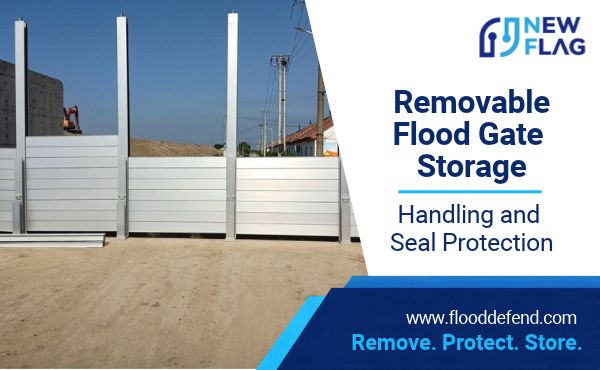
Store spare seals under the supplier’s specified conditions, protected from deformation and contamination. A spare kept folded beneath heavy tools may no longer have the geometry needed when it is finally installed.
For multiple gate models, avoid combining unlabeled seals in one maintenance bin. Similar profiles can be mistaken for one another, especially when only short sections are visible. Identification is part of seal reliability, not merely stock control.
Conclusion
Effective aluminum flood gate seals depend on a coordinated material, profile, and compression design. Specify the approved parts, keep the contact surfaces sound, and investigate uneven seating before increasing tightening force. Maintenance and replacement should restore the designed seal path, including its corners and intersections, rather than introduce an unverified substitute.