
Choosing the right glass flood wall supplier matters as much as choosing the right barrier. A well-made glass flood wall can still underperform when the supplier misreads the site, skips certification, or disappears after installation. Product specifications, supplier reputation, site assessment, customization, cost, and regulatory compliance all deserve careful review.
Property owners, architects, and engineers comparing quotes often face the same problem. Every supplier claims proven flood protection, yet the supporting evidence varies widely. How do you separate a capable partner from a confident sales pitch? This guide offers a practical framework to evaluate glass flood wall suppliers step by step, from first inquiry to final quote comparison.
Understanding Glass Flood Walls
Protection Meets Aesthetics
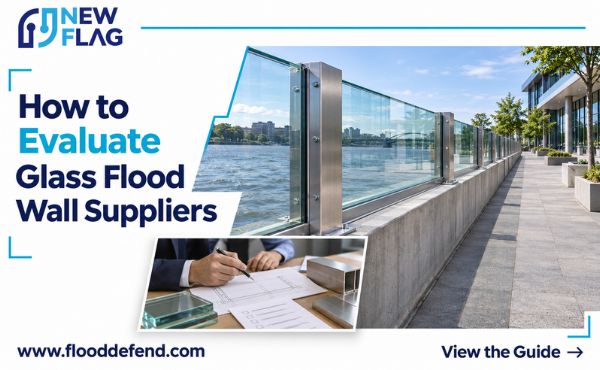
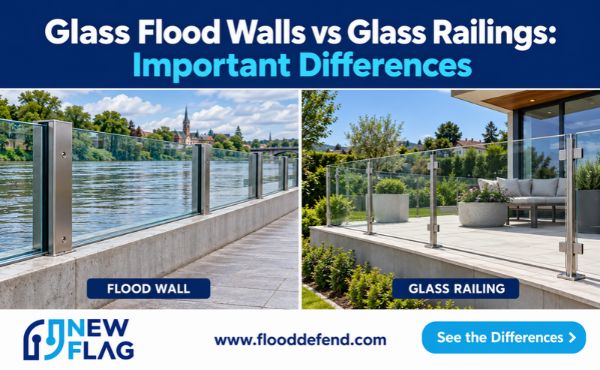
Some properties cannot trade looks for safety. Glass flood walls solve that problem. These flood wall systems combine a structural barrier with transparent panels, so a building keeps its views, daylight, and street presence while gaining serious flood protection. Owners of waterfront hotels, retail frontages, and glass-fronted offices often find this balance essential. A solid wall would work, yet it would change the character of the property forever.
Glass panels also support advanced flood protection solutions in dense urban settings. The barrier reads as architecture rather than heavy infrastructure. Architects can specify framing finishes and panel layouts that match the facade. Engineers still get a watertight, impact-resistant, high-integrity shield behind the design. That combination of performance and appearance is the core reason glass flood walls keep growing in popularity.
Passive And Debris-Ready Design
Deployment matters as much as strength. Many glass flood walls operate as passive flood barriers. The system stays in place permanently, so nobody needs to lift, bolt, or slide panels into position when a storm warning arrives. This always-in-place passive protection removes the human error and warning-time pressure that active systems depend on. Passive flood window barriers extend the same idea to basement openings, lobbies, and other vulnerable infrastructure exposed to flash floods and coastal storms.
Design also sets the limits of performance. Panel span, glass type, framing, and anchorage together determine how much hydrostatic pressure the wall resists. The same choices decide how the barrier deploys and how it fits the surrounding property. A wall sized for a shallow splash zone behaves very differently from one built for deep standing water. Understanding these design drivers helps buyers ask sharper questions later, when they compare suppliers and quotes.
Assessing Sites For Commercial Glass Flood Barriers
Defining Flood Exposure
A site assessment starts with water. Experts examine the flood risk a property actually faces. They look at historical flood levels, the path water takes toward the building, and the speed and depth of a likely event. Site layout comes next. Narrow alleys, shared boundaries, and sloping ground all change how water arrives and where a barrier must sit. Installation challenges receive equal attention. A wall line that crosses buried services, drainage outlets, or a busy entrance needs a different approach than one along a quiet boundary.
This stage answers a simple question. What must the barrier hold back, and what stands in the way of building it? A property exposed to fast-moving water and debris faces different demands than one facing slow, shallow pooling. The answers shape every later decision, from panel span to anchorage depth. Skipping this step invites a barrier that fits the catalog but not the property.
What Suppliers Should Review
A capable supplier turns the assessment into a documented review. The list below covers the core items a thorough evaluation should include.
- Site drawings and dimensions, including the full length and height of the proposed wall line
- The design flood level the barrier must resist
- Foundation conditions, such as slab strength, soil type, and existing structures
- The installation environment, including access, overhead obstructions, and adjacent buildings
- Project requirements, from finish expectations to maintenance access and service life
Each item feeds directly into the engineering. Foundation conditions, for example, determine how the frame anchors to the structure. The installation environment decides which installation methods remain practical on a constrained urban plot. A supplier who reviews these details early can flag problems before fabrication begins.
Quotes for this work are typically priced per project, not per panel. Suppliers therefore ask for the location and an outline of needs at the first contact. Drawings or photos of the wall line help enormously. A photo showing the doorway, the ground level, and the surrounding facade often tells an engineer more than a page of description. Buyers who supply this material early receive faster, more accurate proposals.
The same review applies across commercial glazing flood barriers, demountable systems, and fixed walls. Every commercial flood glass barrier depends on a correct reading of the site. Good flood protection begins with honest site data, and a supplier who asks detailed questions is usually a supplier worth shortlisting.
Comparing Barrier Types And Customization
Permanent Versus Demountable Systems
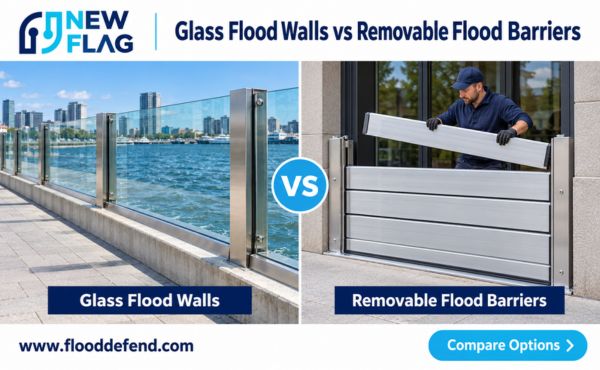
Permanent glass flood walls stay fixed in place year-round. The panels and frame remain installed, so the barrier is always ready when water rises. This option suits entrances, terraces, and frontages where the wall line can remain visible and unobstructed. Property owners gain constant readiness and no deployment labor. The trade-off is a permanent presence along the protected edge.
Demountable systems use panels that store away and slot into fixed anchors when a flood warning arrives. These systems fit sites where the wall line must stay clear most of the year, such as shared courtyards or event spaces. Deployment requires trained staff and warning time. Neither type is superior in general. Permanent walls favor readiness, and demountable walls favor flexibility. The right choice depends on the site, the occupants, and the flood warning time available.
Customization And Design Options
Standard panels rarely match every property. Irregular openings, angled corners, and stepped ground levels all demand tailored panel sizes and frame geometry. Suppliers who fabricate to project drawings can deliver a watertight fit where catalog modules would leave gaps.
Historic buildings present the sharpest test. Frames must anchor discreetly, finishes should respect the original facade, and panel spans must work around masonry that cannot carry heavy loads. Skilled suppliers survey the structure and adjust anchorage details accordingly. Site-specific needs extend to access routes, maintenance clearance, and the visual weight of the frame. Customization turns a generic flood barrier into a solution built for one property. Buyers should confirm that customization covers the frame, seals, and connections, not just the glass.

Glass Wall Testing And Glazing System Requirements
Independent testing and certification offer the clearest signal of product quality. FM Approval to the FM/ANSI 2510 Flood Abatement standard stands as a recognized benchmark. A certificate from a qualified testing body tells buyers that a design has survived scrutiny beyond the sales brochure. Ask every supplier for documentation, and verify the certificate covers the exact product line being quoted.
Flood wall testing puts a barrier under realistic stressors. Labs apply hydrostatic pressure, debris impact, and repeated loading to see how a design behaves. Some programs also use Finite Element Analysis (FEA) to model stress across panels and frames before physical testing begins. The testing of flood walls therefore combines calculation with real-world proof. A manufacturer who shares test reports freely usually has results worth sharing.
Glazing system requirements deserve equal attention. The table below lists the core elements to confirm.
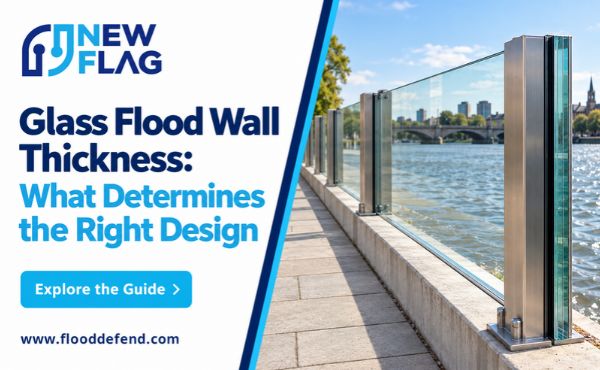
- Glass type and thickness, matched to the design hydrostatic pressures
- Panel span, meaning the unsupported width each pane must carry
- Framing material and profile, sized for the loads involved
- Seals and gaskets, including advanced watertight sealing systems at every joint
- Structural connections between frame, glass, and building
These glazing systems determine whether the wall stays watertight under load. A strong pane in a weak frame fails as surely as the reverse. Buyers should ask how each element was selected and whether the combination was tested together. Expected performance claims mean little without that evidence.
Vetting Reputation And Comparing Quotes
Reputation takes time to build and is hard to fake. Ask suppliers for completed projects similar to yours. Speak with past clients about installation quality and after-sales response. Check how long the company has worked in flood protection and whether it manufactures its own systems or resells them. A manufacturer with direct control over fabrication can usually resolve issues faster.
Quotes deserve a structured comparison, not a glance at the bottom line. Weigh these factors side by side:
- Technical support during design and installation
- Warranty terms, including what is covered and for how long
- Installation scope, such as whether the supplier provides crews or supervision
- Maintenance requirements and spare parts availability
- Regulatory compliance with local floodplain rules
Owners who evaluate glass flood wall suppliers on these points see past price alone. The cheapest quote can cost more over the life of the barrier. A higher quote with strong support and clear warranty terms often delivers better value.
Request documentation from every candidate. Test certificates, project references, and detailed drawings separate serious suppliers from hopeful ones. Compare at least three quotes, and score each one against the same criteria. Buyers who evaluate glass flood wall suppliers this way make a decision grounded in evidence, not persuasion.
Conclusion
The evaluation follows a clear sequence. First, understand the barrier and its passive design. Second, assess the site and its flood exposure. Third, choose between permanent and demountable systems. Fourth, score each supplier on flood wall testing, glazing system requirements, technical support, and quotes.
Two points are non-negotiable. Regulatory compliance comes first. Fit with the specific site and application comes second. A certified system still fails the property when it suits a different location.
Request documentation from every candidate. Ask for test certificates, project references, and detailed drawings. Compare quotes from multiple suppliers before you decide. Buyers who evaluate glass flood wall suppliers this way secure reliable flood protection. That discipline turns a crowded market of flood protection solutions into a shortlist you can trust.
FAQ
What do glass flood wall suppliers need to prepare a quote?
Suppliers price these projects per project, not per panel. They ask for the location, an outline of needs, and drawings or photos of the wall line. Site dimensions, flood level, and foundation details help them return a faster, more accurate proposal.
Are glass flood walls always in place, or do they need setup?
Both options exist. Passive glass flood walls stay installed year-round, so the barrier is ready when water rises. Demountable systems store away and slot into fixed anchors during a flood warning. The right choice depends on the site and the warning time available.
Which certification should buyers look for?
FM Approval to the FM/ANSI 2510 Flood Abatement standard is a recognized benchmark. This certification shows that a design has passed independent testing beyond the sales brochure. Buyers should confirm the certificate covers the exact product line being quoted.
What glazing details affect flood performance?
Glass type and thickness, panel span, framing profile, seals, and structural connections all matter. These elements work as one system. A strong pane in a weak frame fails under load. Buyers should ask whether the full combination was tested together.
How many quotes should property owners compare?
Compare at least three quotes, and score each one against the same criteria. Weigh technical support, warranty terms, installation scope, maintenance needs, and regulatory compliance. The cheapest quote can cost more over the life of the barrier.