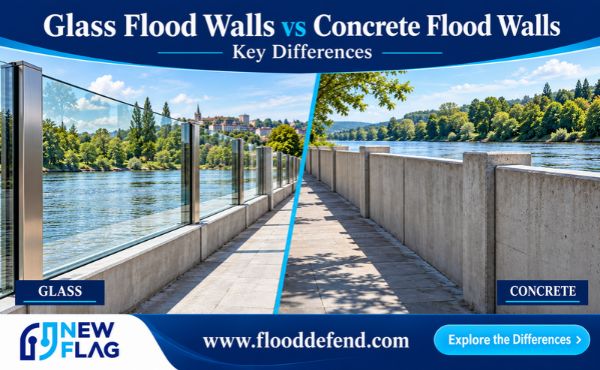

Glass flood walls and concrete flood walls both help keep floodwater away from buildings, public spaces and infrastructure. Their most visible difference is transparency: glass flood walls preserve views through clear panels, while concrete flood walls create solid, opaque barriers.
The differences also extend to construction, cleaning, repairs and costs. Glass systems combine engineered glazing with supporting frames and seals. Concrete systems rely on reinforced concrete walls with suitable foundations and sealed joints. Neither material automatically provides better flood protection. Performance depends on how the complete system is designed, installed and maintained.
What Are Glass Flood Walls?
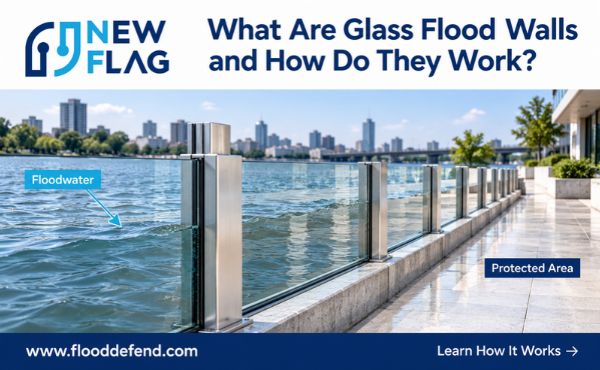
Glass flood walls are permanent flood barriers made with engineered glass panels, supporting posts, anchors and watertight seals. They allow people to see through the protected boundary while helping hold back rising water.
These systems use laminated glass, which consists of glass layers bonded together with interlayers. The glass works with its supporting structure to resist the expected flood forces. Ordinary windows and glass railings should not be assumed to provide the same protection.
Transparent flood barriers are particularly useful along riverwalks, waterfront parks and commercial areas where views contribute to everyday use. Some extend upward from concrete bases, combining solid lower sections with transparent upper panels.
What Are Concrete Flood Walls?
Concrete flood walls are solid barriers generally made from concrete reinforced with steel. The reinforcement helps the walls resist bending forces as floodwater pushes against them.
They may be poured on site or assembled from precast sections manufactured elsewhere. Both approaches require suitable foundations and carefully constructed connections. Joints between sections must also limit water entry.
Reinforced concrete flood walls are used along waterways, around infrastructure and beside buildings. Their appearance can range from plain concrete to textured, colored or clad surfaces that blend with surrounding architecture.
Glass Flood Walls vs Concrete Flood Walls at a Glance
| Feature | Glass Flood Walls | Concrete Flood Walls |
|---|---|---|
| Main construction | Laminated glass, frames, anchors and seals | Reinforced concrete, foundations and sealed joints |
| Visibility | Preserve views through the panels | Block views through the wall |
| Appearance | Transparent sections with visible supporting posts | Solid surfaces with various finish options |
| Installation | Panels and frames fitted to suitable supporting structures | Concrete poured on site or precast sections installed |
| Routine maintenance | Cleaning and checks of panels, seals and frames | Checks of cracks, joints and concrete condition |
| Repairs | Damaged panels or supporting components may need replacement | Damaged areas may need sealing, patching or structural repairs |
| Costs | Depend on glazing, frames, foundations and access | Depend on wall size, foundations, construction method and finishes |
| Common settings | Waterfront public spaces and locations where views matter | Waterways, industrial boundaries and infrastructure areas |
Main Differences Between Glass and Concrete Flood Walls
Appearance and Visibility
Glass flood walls preserve connections between protected spaces and the surrounding landscape. People walking beside rivers can still see the water, while nearby restaurants and hotels can retain outward views through the panels.
Concrete flood walls block sightlines wherever the solid wall stands above eye level. Lower walls may have less effect, but the visual change becomes more noticeable as wall height increases.
However, glass systems are not invisible. Posts, panel edges, reflections and surface dirt remain visible. Concrete walls also offer design flexibility: stone cladding, textured finishes and landscaping can help them fit their surroundings. The main distinction is transparency rather than whether either material can look attractive.
Flood Protection
Both types can provide effective protection within their designed flood conditions. Rising water pushes sideways against the walls, and that pressure increases as water becomes deeper. Panels, wall sections, connections and foundations must work together to resist it.
Glass systems transfer water forces through the glazing and supporting frames into the structure below. Concrete systems transfer those forces through reinforced wall sections into their foundations.
Moving water, waves and floating objects can create additional forces. Resistance to water pressure does not automatically establish resistance to debris impacts; these conditions require appropriate assessment. Research into glass flood defences has specifically examined impacts from floating debris.
For this reason, statements such as “concrete is always stronger” or “glass provides the same protection everywhere” oversimplify the comparison. The relevant question is what conditions the installed system was designed to withstand.
Installation
Glass flood walls generally involve fitting manufactured panels and frames onto prepared supporting structures. Accurate positioning matters because panel connections, seals and anchors must fit correctly.
Concrete poured on site involves formwork, steel reinforcement, concrete placement and time for strength development. Precast concrete sections follow another process: finished sections are delivered, lifted into place and connected.
Neither method is always faster. Access, foundations, weather, component availability and wall length affect the schedule. Existing paving also cannot automatically support glass flood barriers simply because the panels appear relatively slim.
Maintenance and Cleaning
Glass flood walls need cleaning to preserve their transparency. Dust, rain marks, bird droppings and flood deposits can reduce visibility even when the panels remain structurally sound.
Maintenance also includes checking glass edges, frames, anchors and seals. Chips, cracks, loose components or deteriorated sealing materials need attention. Cleaning alone does not confirm that the barriers remain ready for flooding.
Concrete walls do not require transparent surfaces to stay clear, but they still need inspection. Relevant problems include cracks, damaged joints, surface flaking and exposed reinforcement. Rust staining may indicate deterioration around the steel inside.
Both types benefit from checks after flooding or noticeable impacts. Inspection frequency should follow the system requirements and local conditions.
Damage and Repairs
Damaged glass panels generally need assessment and, where necessary, replacement. Repair planning must consider panel dimensions, availability, lifting access and how protection will be maintained during the work.
Laminated glass can hold broken pieces together, but cracked panels should not be assumed to retain their original flood resistance. Their condition and remaining capacity require assessment.
Concrete repairs vary with the damage. Small surface defects may need localized treatment, while deeper cracks, damaged reinforcement or movement can require more substantial work.
Repair time therefore depends on the actual problem. Replacing individual glass panels may be straightforward in accessible modular systems, while major concrete damage can involve lengthy repairs. The reverse can also occur when replacement glazing requires specialist manufacture.
Costs Over Time
Construction costs include more than the visible wall materials. Foundations, ground preparation, access, wall height and the length of the protected boundary all influence the total.
Glass flood walls include costs for engineered glazing, frames, seals and installation. Concrete flood walls include reinforcement, concrete placement or precast handling, joints and any architectural finishes.
There is no reliable universal price difference without comparable project conditions. Complex foundations can outweigh differences in above-ground materials, while decorative finishes can increase concrete construction costs.
Long-term expenses also vary. Glass systems require cleaning and may need replacement panels or seals. Concrete systems may need crack repairs, joint renewal or treatment of deteriorated areas. Meaningful comparisons consider both initial construction and ongoing care.

Where Each Type Is Commonly Used
Glass flood walls are commonly associated with locations where maintaining views supports the purpose of the space. Examples include:
- Riverside promenades and waterfront parks.
- Outdoor hospitality areas.
- Scenic public spaces.
- Commercial developments overlooking water.
Concrete flood walls are widely used where solid boundaries are acceptable and visual transparency is less important. Examples include industrial sites, transport infrastructure and sections of river flood defences.
These applications are not fixed rules. Concrete walls can form part of attractive public landscapes, and glass walls can protect infrastructure. Site conditions and the surrounding environment determine how each approach fits.
The everyday experience also matters. Flood defences remain visible during normal weather, so their effect on public spaces continues long after floodwater has receded.
Glass and Concrete in Combined Flood Walls
Glass and concrete do not have to be competing alternatives throughout an entire project. Many flood defences combine them.
Concrete lower sections can support transparent upper panels. This arrangement retains views above the base while providing solid construction nearer ground level. Elsewhere, continuous concrete sections may connect with glass sections at viewpoints or public gathering areas.
Combined designs can adapt the appearance of flood defences along the same route. However, transitions between materials still need proper support and sealing. Adding glass above existing concrete walls requires checking whether the original walls and foundations can carry the additional forces.
Limitations Shared by Both Types
Neither glass nor concrete flood walls can prevent every possible route of flooding. Water may rise above the wall tops, pass around unfinished ends or seep underneath. Rain falling inside protected areas may also become trapped.
Access routes create another consideration. Openings for pedestrians and vehicles may need compatible flood gates or removable closures. Permanent wall sections do not protect open gaps by themselves.
Drainage remains important behind both types of walls. Depending on the site, drains, collection points and pumps may be needed to manage rainfall, leakage or seepage. Floodwall guidance identifies these measures as part of the wider protection system.
Understanding these shared limits helps explain why flood protection depends on the complete boundary and surrounding drainage, rather than wall materials alone.
Frequently Asked Questions
Do Glass Flood Walls Also Function as Safety Railings?
Some systems may provide both flood protection and protection against falls, but these functions have different requirements. Flood resistance alone does not confirm that glass walls meet applicable railing requirements. Systems serving both purposes need appropriate design and verification for each role.
Can Existing Concrete Flood Walls Support Glass Extensions?
Sometimes, but suitability cannot be judged from appearance alone. The existing concrete, reinforcement, foundations and proposed connections need assessment. Raising the barrier increases the forces it may experience during higher water levels, so installing glass extensions is more involved than attaching panels to the wall tops.
Can Flood Walls Be Raised Later?
Some systems allow future height increases, especially where this was considered during the original design. Others may need stronger foundations, replacement components or substantial rebuilding. Whether walls use glass or concrete, additional height changes the demands on the whole structure and requires reassessment.
Conclusion
Glass flood walls and concrete flood walls provide different ways to create permanent flood barriers. Glass preserves visibility and suits spaces where waterfront views matter. Concrete provides solid boundaries with several construction and finish options.
Their practical differences include installation, cleaning, maintenance, repairs and costs. Neither material guarantees better flood protection on its own. Reliable performance depends on appropriate design, sound construction and continued care, whether the defences use glass, concrete or both.