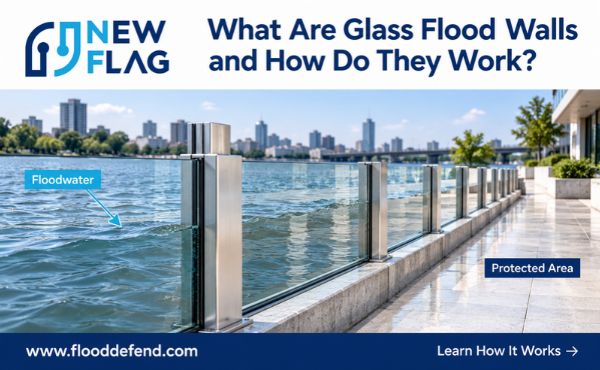
Glass flood walls are transparent, structurally reinforced flood defense systems. Engineered glass panels sit in a sturdy frame. The panels block and divert rising water. The frame anchors the system to the ground or to an existing structure. Clear panes keep the view open while the assembly holds a steady line against the water.
These walls suit sites where permanent flood protection must blend into the surroundings. Homeowners, planners, and property managers can weigh the options with clear facts. Each site has its own needs. A close look at the setting shows where glass walls fit best.
What Glass Flood Walls Are
Glass flood walls are transparent, structurally reinforced flood defense systems. They are built with laminated tempered structural glass. Each unit combines clarity with load-bearing capacity. The result is a permanent line of defense that does not hide the landscape behind it.
Core Components
Every system rests on three main parts. The first part is the glass itself. Panes are produced as high-strength laminated glass, which bonds multiple glass layers with a tough interlayer. The second part is the frame. Frames are typically metal and carry the panes along their full edges. The third part is the foundation or mounting structure. This base transfers water loads into the ground or into an existing flood wall.
Clear glazing panes create a high-strength, watertight solution. Seals between the panes and the frame close the joints. A continuous seal keeps water from seeping through the assembly. Posts divide long runs into manageable bays. Each bay acts as a separate unit, and the units together form one continuous barrier.
These transparent barriers cause minimal visual intrusion where permanent flood protection is required. Views of rivers, harbors, and historic streets stay open. Light still reaches nearby buildings and public spaces. That matters in places where a solid wall would change the character of the area.
Materials and Strength
The glass in these systems is not ordinary window glass. Laminated tempered structural glass is heat-treated for strength and bonded in layers. The interlayer holds the layers together if a pane breaks. Cracks stay contained, and the panel keeps most of its capacity. This behavior supports impact resistance against floating debris during a flood.
Reinforced glass panels also resist bending. Water pushes evenly across the surface, and the panes flex only slightly under design loads. The frame absorbs that force and spreads it to the posts and base. Engineers size each component for the local flood depth and the expected water pressure. Deeper water means greater pressure, so the design changes with the site.
Transparent panels offer another practical benefit. Inspectors can see the water level and spot debris buildup without climbing over a solid structure. Maintenance crews can check seals and joints by eye. Small problems are easier to find before they grow.
Together, these parts form flood barrier systems that work as a single engineered assembly. The glass, frame, and base each play a distinct role. No part carries the load alone. That division of labor is the reason a clear wall can hold back serious water.
How Glass Flood Walls Work
The Barrier Mechanism
Water exerts pressure in every direction, and that pressure grows with depth. A glass flood wall uses this fact to its advantage. Each panel is fixed along all four edges, so the load spreads from the glass into the frame and then into the foundation. The assembly forms a stable, sealed wall. As the flood rises, the pressure against the panes increases, and the wall pushes back with matching force. The design turns a growing threat into a growing resistance.
A tight seal is the heart of the system. Gaskets and joint seals close every gap between panes, posts, and base. Water cannot slip through the joints, so the barrier holds a continuous line. The frame carries the bending force, and the base anchors everything to the ground or to an existing structure. No single part absorbs the full load. This shared duty is what makes reinforced glass a practical material for holding back flood water.
Installation and Operation
Glass flood walls require no operational input. Nobody has to raise them, bolt them in place, or deploy them before a storm. The system stands ready at all times. That passive nature sets it apart from temporary flood panels, which demand storage space, warning time, and physical labor. A permanent flood panel system removes those steps from the emergency plan.
Installation often begins with an existing floodwall. Mounting hardware can attach the frame directly to a concrete wall, a quay, or a low parapet. This approach adds height and protection without rebuilding the whole structure. Where no wall exists, a new foundation is cast to carry the posts and base plates.
Engineers size each panel for the water pressure and force expected at that site. They account for the design flood depth, the speed of flowing water, and the impact of floating debris. Deeper water means higher pressure, so panels grow thicker or bays grow shorter. The result is reliable flood defense that works the same way in every storm, with no moving parts to fail.
Effectiveness and Trade-Offs
Where They Perform Best
Glass flood walls shine in places where a solid barrier would spoil something valuable. Historic town centers, river promenades, and waterfront properties often depend on their outlook. A clear wall protects these areas while it preserves views of the water and the skyline. Visitors still see the river. Residents still enjoy the light. The structure does its job without becoming the main feature of the scene.
These systems also suit long stretches of public space. Parks, quays, and market squares can gain effective flood protection without losing their open character. The transparent panels deliver unobstructed views during normal weather and during a flood event. That combination makes glass flood walls a strong fit for scenic areas where permanent protection must coexist with daily life.
Limitations to Consider
No barrier suits every site, and glass systems carry real trade-offs. Panes need a solid foundation or a sound existing wall to carry the load. Sites with weak ground or irregular surfaces may need extra engineering work. Debris impact also deserves attention. Floating objects can strike the panels during a flood, so designers plan for that force.
Cost is another factor. Transparent systems often carry a higher price than simple solid alternatives, and the budget must cover design, foundations, and installation. Maintenance matters too. Seals and joints need periodic inspection to stay watertight. Where budgets are tight or views matter less, other flood barriers may serve better. Glass walls remain one good option among several, and the right choice depends on the site.

Maintenance, Cost, and Compliance
Upkeep and Permits
Routine upkeep keeps glass flood walls ready for the next high water. Inspectors should check seals, gaskets, and joints at least once a year. A close look after any flood event matters just as much. Small gaps in a seal let water creep through, and early repair prevents water damage from spreading. Cleaning the glass keeps visibility clear, so crews can spot debris or cracks by eye. Any chipped or cracked pane deserves prompt attention from a qualified technician.
Permits vary by location. Most communities require a flood protection permit before installation begins. Local floodplain authorities review the design, the foundation, and the expected flood depth. Some areas also ask for proof that the barrier meets building codes or community floodplain rules. Checking with the local authority early saves time and avoids redesigns later. A qualified installer can usually guide the permit process from start to finish.
Budgeting Basics
Costs for glass flood walls vary widely by site. The total usually covers design work, the panels and frames, foundation construction, and installation labor. Longer runs and deeper design floods raise the price. Sites that need new foundations cost more than sites that mount onto an existing wall. Ongoing upkeep adds a smaller yearly figure for inspections and seal repairs.
A realistic budget should include a contingency for unexpected ground conditions or permit conditions. Comparing quotes from several installers helps buyers understand the range. Buyers should also weigh the long service life of a permanent system against the repeated cost of temporary flood barriers. A clear picture of upfront and lifetime costs supports a sound decision.
Glass Flood Walls vs. Traditional Flood Barriers
Key Differences
Glass flood walls and solid flood barriers both hold back water. They differ in how they look, how they install, and what they cost. The table below sets the main contrasts side by side.
| Feature | Glass flood walls | Traditional flood barriers |
|---|---|---|
| Visibility | Clear panes keep the view open | Solid materials block sight lines |
| Typical setting | Scenic areas, waterfront properties, historic districts | Industrial sites, open land, back-of-house areas |
| Foundation needs | Sound base or existing wall required | Varies by type and site |
| Upfront cost | Generally higher | Generally lower |
| Upkeep | Seal and pane inspection | Surface and joint checks |
Traditional flood barriers cover a wide range. Concrete walls, earth levees, and demountable panels all belong to this group. Each type of flood barriers serves a purpose, and each brings its own strengths. Solid walls cost less per foot in many cases. They also tolerate rough ground and heavy debris impact well. Glass systems trade some of that ruggedness for transparency and a lighter visual footprint.
Choosing the Right Fit
The right choice starts with the site. A historic promenade or a row of waterfront properties often needs flood protection that does not hide the river. Glass flood walls fit that brief. An industrial yard or a remote levee may place no value on a view. A solid barrier usually serves those spots at a lower price.
Budget and maintenance capacity also guide the decision. Transparent systems carry higher upfront costs and need periodic seal checks. Communities with tight budgets may prefer conventional options. Owners who value open sight lines may accept the higher price. Many projects combine approaches, using glass along public frontages and solid barriers elsewhere. A local floodplain authority or installer can assess the site and recommend the best mix of barriers.
Conclusion
Glass flood walls are transparent, reinforced systems. Laminated panes, sturdy frames, and sealed joints hold back rising water. These walls need no deployment. They stand ready at all times, and they suit scenic waterfronts where open views matter. These walls are one option among several flood barriers, not a universal answer. Solid walls cost less and tolerate rough ground. Glass walls trade that ruggedness for transparency. For flood protection that fits a specific site, start with local advice. A floodplain authority or installer can review the ground, the design flood depth, and permit rules. That review shows whether glass walls belong in your plan.
FAQ
Do glass flood walls need to be deployed before a flood?
No. These walls stay in place at all times. Nobody has to raise panels or bolt parts together when a flood warning arrives. That passive design removes storage, labor, and warning time from the emergency plan.
Can glass flood walls mount on an existing wall?
Yes, in many cases. Mounting hardware can attach the frame to a concrete wall, a quay, or a low parapet. This adds height and flood protection without rebuilding the whole structure. Sites with weak ground may need a new foundation instead.
How often do the seals need checking?
Inspectors should check seals, gaskets, and joints at least once a year. A close look after any flood event matters just as much. Early repair of a small gap keeps water from creeping through the joints of these walls.
Do glass flood walls cost more than solid barriers?
Often, yes. Transparent systems usually carry a higher upfront price, and the budget must cover design, foundations, and installation. Solid flood barriers generally cost less per foot. The right choice depends on how much the view matters at the site.
Will debris damage the glass during a flood?
Floating objects can strike the panels, so designers plan for that force. Laminated tempered glass holds its layers together if a pane cracks, and the panel keeps most of its capacity. Engineers size each bay for the debris risk at that location.