
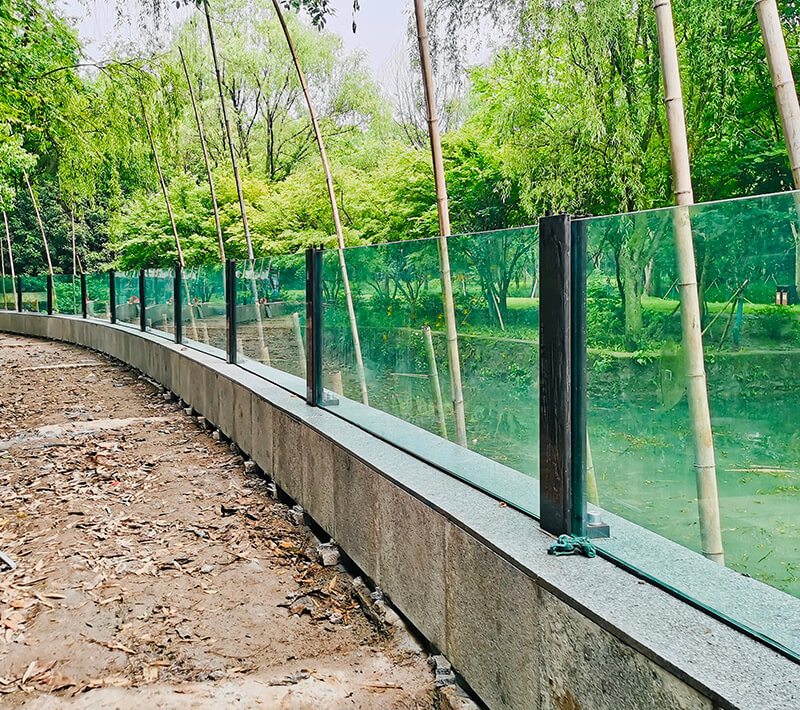
Laminated glass is used in glass flood walls because it combines transparency with bonded construction that can retain fragments after breakage. Its glass layers resist bending, while polymer interlayers bond those layers together and influence how the panels behave under loading and after damage.
However, laminated glass is not unbreakable, and fragment retention does not automatically mean continued flood protection. The safety of glass flood walls depends on how the glass, interlayers, frames, seals and foundations work together under the conditions they are designed to resist.
Materials Used in Laminated Glass
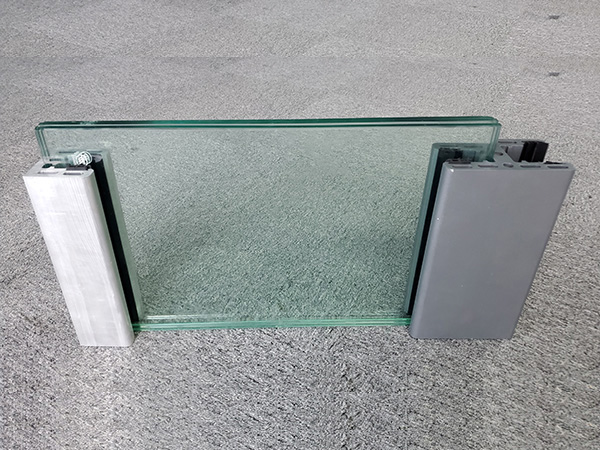
Laminated glass consists of two or more glass layers bonded with polymer interlayers. These materials form composite panels rather than separate sheets placed next to each other. The glass provides transparency and stiffness, while the interlayers help maintain the connection between layers.
Glass Layers
Glass layers carry loads and resist bending. Their thickness, treatment and arrangement affect the behavior of laminated panels.
Annealed, heat-strengthened and fully tempered glass have different properties. These descriptions refer to the treatment of the glass, while “laminated” describes the bonded construction. Laminated panels can therefore contain heat-treated glass layers.
| Glass Type | General Characteristic | Breakage Behavior |
|---|---|---|
| Annealed glass | Glass without heat strengthening | Typically breaks into larger pieces |
| Heat-strengthened glass | Heat treatment increases strength compared with annealed glass | Generally produces larger fragments than fully tempered glass |
| Fully tempered glass | Heat treatment increases strength and changes fragmentation | Typically breaks into many smaller fragments |
These differences matter after damage. Fragment size and fracture patterns influence how broken glass interacts with the interlayer. Fully tempered glass does not automatically provide the most suitable behavior for every laminated construction.
Polymer Interlayers
Interlayers bond the glass layers and help retain fragments after breakage. They also influence how effectively the layers act together when the panels bend.
Polyvinyl butyral, usually called PVB, is widely used in laminated glazing. Structural PVB grades and ionoplast interlayers provide different stiffness and other performance characteristics.
The interlayer does more than hold pieces together. Its properties affect load transfer between glass layers and the deformation of damaged panels. Different grades can behave differently, even when they belong to the same material family.
Water Pressure and Glass Behavior
Floodwater applies pressure across the submerged surface of glass panels. This pressure increases with depth, so the lower parts of glass flood walls experience greater pressure than the upper parts.
As the panels bend, forces pass into the supporting frames and posts, then through anchors into foundations. The glass does not resist flood loads independently of these components.
Water Depth and Panel Dimensions
Increasing retained water depth increases both the pressure near the bottom and the total force acting on the wall. This is why raising the protection height changes structural demands.
Panel width also affects bending. Wider panels span greater distances between supports and may require different glass constructions or framing arrangements.
Support positions matter too. Glass held along several edges behaves differently from glass supported mainly along two edges or at its base. Total thickness alone cannot describe these differences.
Temperature and Loading Duration
Polymer interlayers respond to temperature and time under loading. Their stiffness can change, affecting how strongly the glass layers act together.
Brief impacts and sustained floodwater pressure therefore create different demands. Floodwater may remain against panels for extended periods, so short-duration performance does not fully describe behavior during longer loading.
Research on laminated glass identifies temperature, loading duration and support conditions as important influences on structural response.
Safety Before and After Glass Breakage
The safety of laminated glass involves several stages: resisting loads while intact, responding to impacts and retaining some integrity after damage. These stages should not be treated as equivalent.
Resistance Before Breakage
While the glass layers remain intact, their construction and supports determine how the panels carry loads. Suitable engineering limits stresses and deformation under the specified conditions.
Glass can still break if loading exceeds its capacity or if damage affects its performance. Floating debris, accidental impacts and damaged edges are among the conditions that may require consideration.
Impact safety also depends on the type of impact. Assessments involving human contact do not automatically establish resistance to floating debris or other flood-related impacts. Glazing evaluations distinguish between impact, post-breakage and flood-exposure performance.
Fragment Retention
When glass layers fracture, fragments can remain bonded to the interlayer. This helps reduce the release of loose pieces and can keep damaged panels together.
That behavior explains an important safety benefit of lamination. However, it does not mean cracked panels remain as stiff or strong as intact panels.
The result depends on the fracture pattern, adhesion, interlayer properties and supporting arrangement. Broken glass layers can deform substantially even when fragments remain attached.
Remaining Performance After Damage
Three aspects of post-breakage behavior need separate explanation:
| Performance Aspect | Meaning |
|---|---|
| Fragment retention | Broken pieces remain attached to the interlayer |
| Residual load resistance | Damaged panels continue carrying specified loads |
| Leakage control | The damaged assembly continues limiting water passage |
Fragment retention alone does not establish the other two outcomes. Panels may remain in position but lose substantial load resistance or allow increased leakage.
Research shows that post-breakage behavior depends on factors including temperature, loading duration, fragment characteristics and fixings. Continued flood resistance after damage must therefore be established for the relevant construction rather than assumed from the presence of interlayers.
Seals and Complete System Performance
Glass strength and leakage control are related through the assembly, but they perform different roles. Glass panels may remain intact while water enters through poorly performing joints.
Seals help control water passage between the panels, frames, bases and neighboring structures. Their effectiveness depends on suitable joint design, compatible materials and maintained connections.
Frames and posts support the glass and transfer loads. Anchors connect those supports to foundations, which distribute forces into the ground or supporting structure. Movement along this load path can affect both panel support and sealing.
This makes glass flood walls complete structural systems rather than collections of strong glass panels. Flood protection evaluations address assemblies and their performance under defined conditions.
Connections at corners, wall ends and access openings also matter. Even suitable panels cannot prevent water from entering around unprotected ends or through gaps elsewhere along the protection line.
Environmental Exposure and Durability
Glass flood walls remain exposed between flood events. Sunlight, temperature changes, moisture and local environmental conditions influence their long-term condition.
Interlayer behavior under changing temperatures is especially relevant to structural performance. The materials must be considered under the conditions expected during loading, rather than only at convenient laboratory temperatures.
Panel edges and surrounding seals also need appropriate detailing. Visible changes such as cloudy edges, bubbles or separation between layers require assessment to establish their cause and significance.
Coastal exposure introduces additional considerations for frames, connections and other components. The durability of the complete installation depends on all materials and interfaces remaining suitable for their environment.
Lamination does not eliminate aging, damage or maintenance needs. Its safety benefits depend on the condition of the bonded glass and the surrounding assembly.
Testing and Safety Evidence
Testing explains how materials and assemblies behave under controlled conditions. Different evaluations answer different questions, so results need to be understood within their scope.
Material and Assembly Evaluations
Material evaluations describe properties of glass or interlayers. Assembly evaluations examine components working together.
For example, interlayer data can help explain stiffness, but it cannot establish the strength of anchors or leakage through joints. Similarly, safety glazing classifications do not by themselves establish performance under sustained floodwater pressure.
Dedicated flood evaluations include assessment of laminated glass under hydrostatic loads. These address conditions beyond ordinary glazing use.
Conditions and Limitations
Performance evidence relates to specified configurations and conditions. Panel dimensions, glass layers, interlayers, supports and loading duration can all influence the result.
The following distinctions help explain what different evaluations establish:
| Evaluation Area | Main Question |
|---|---|
| Structural loading | Can the assembly resist specified forces and deformation? |
| Leakage | How much water passes through under the stated conditions? |
| Impact | How does the assembly respond to defined impacts? |
| Post-breakage behavior | What performance remains after specified damage? |
| Durability | How do relevant exposure conditions affect materials or connections? |
Passing one evaluation does not automatically demonstrate all other forms of performance. Safety comes from understanding how the relevant evidence applies to the complete system.
Inspection and Replacement
Inspection helps identify changes that may affect glass, bonds, supports or seals. It supports continued performance rather than changing the original design limits.
Visible Signs of Damage
Relevant signs include cracks, edge chips, impact marks and visible separation within laminated panels. Frames and joints may show displaced seals, loose connections or unusual movement.
Supporting concrete can also develop cracking or settlement. These conditions need attention because glass performance depends on stable support.
Not every visible mark has the same significance. Assessment considers the damage location, extent and relationship to the specified construction.
Damaged Panels and Repairs
Laminated panels should not be assumed suitable for further flooding simply because they remain standing. Retained fragments can conceal a substantial reduction in structural performance.
Replacement panels need to preserve the approved construction. Similar appearance and total thickness do not establish equivalence when glass treatments, interlayers or edge details differ.
Repairs also need to restore surrounding seals and connections. Replacing glass without addressing damaged supports or joints may leave other performance problems unresolved.
Frequently Asked Questions
Are Laminated Glass and Tempered Glass the Same?
No. Tempering changes the strength and fragmentation of glass through heat treatment. Lamination bonds multiple glass layers together. Laminated assemblies can contain tempered layers, so these terms describe different features. www.kuraray.com
Are Laminated Glass Panels Hollow?
No. Their glass layers are bonded through interlayers. This differs from insulating glass units, which contain separated panes with sealed cavities.
Do Thicker Interlayers Always Improve Flood Resistance?
No. Thickness is only one factor. Interlayer stiffness, temperature response, glass construction and supports also influence behavior. Increasing interlayer thickness does not replace assessment of the complete assembly.
Does Clear Glass Indicate Structural Safety?
No. Clear appearance describes visibility, not structural capacity. Some important properties are established through specifications, calculations and testing rather than visual inspection alone.
Conclusion
Laminated glass contributes transparency and fragment retention to glass flood walls. Its bonded layers also influence structural behavior, but their performance changes with construction, temperature, loading and damage.
Safety depends on the complete assembly. Understanding the difference between intact strength, fragment retention and continued leakage control explains both the value and the limits of laminated glass in flood protection.